One of our sugar mill customers reached out to our team because their injection cooling water pump was not achieving the required duty – more precisely, it was not performing to its pump curve.
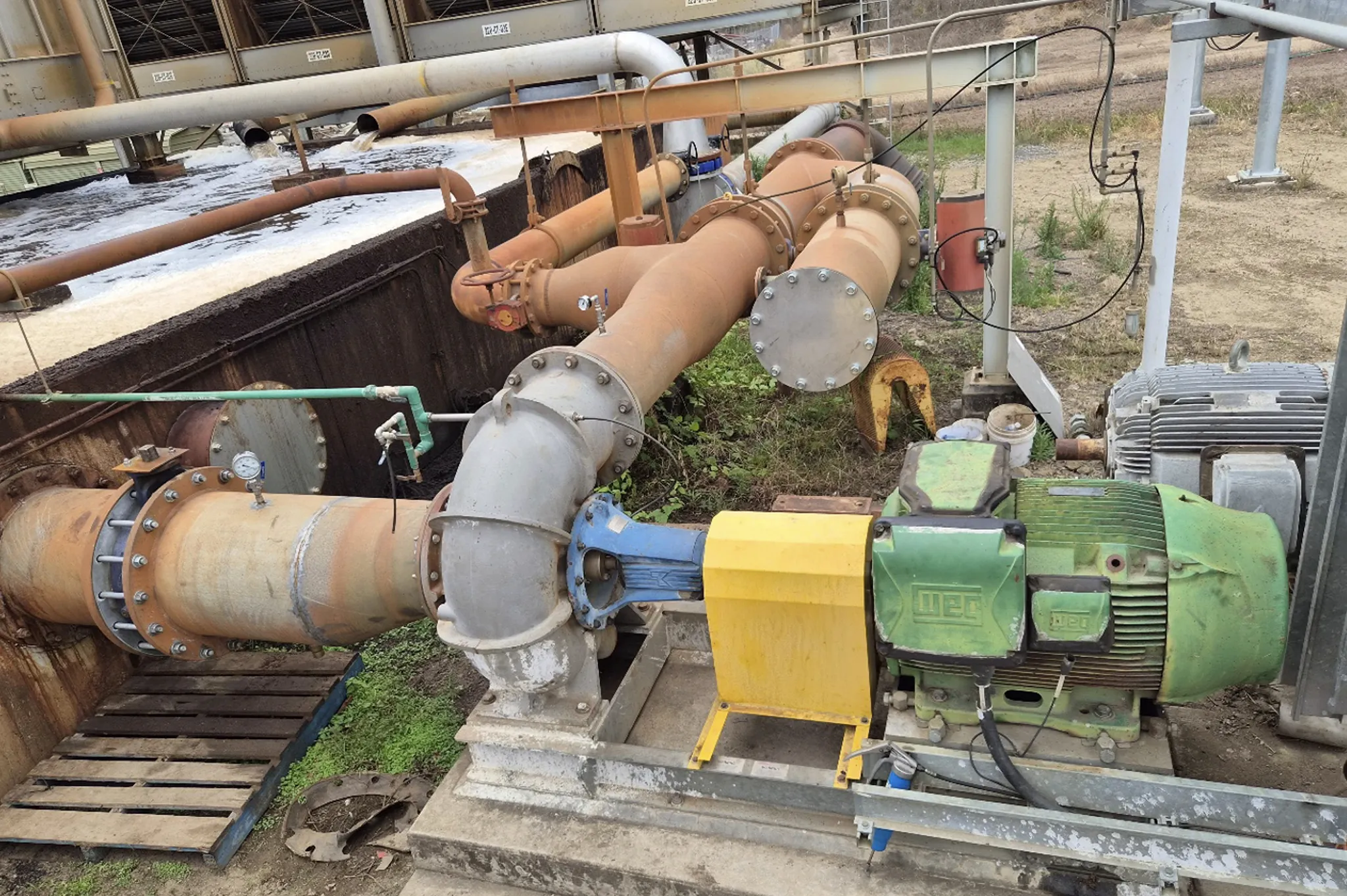
The pump draws from an open tank fed by the cooling tower returns, through a 500 mm ID HDPE suction line.
Pictured: The injection cooling water pump set and suction arrangement from the cooling tower tank.
THE CHALLENGE
Close to 80% of centrifugal pump problems start on the suction side, so that is where we looked first. A site visit turned up the usual suspects:
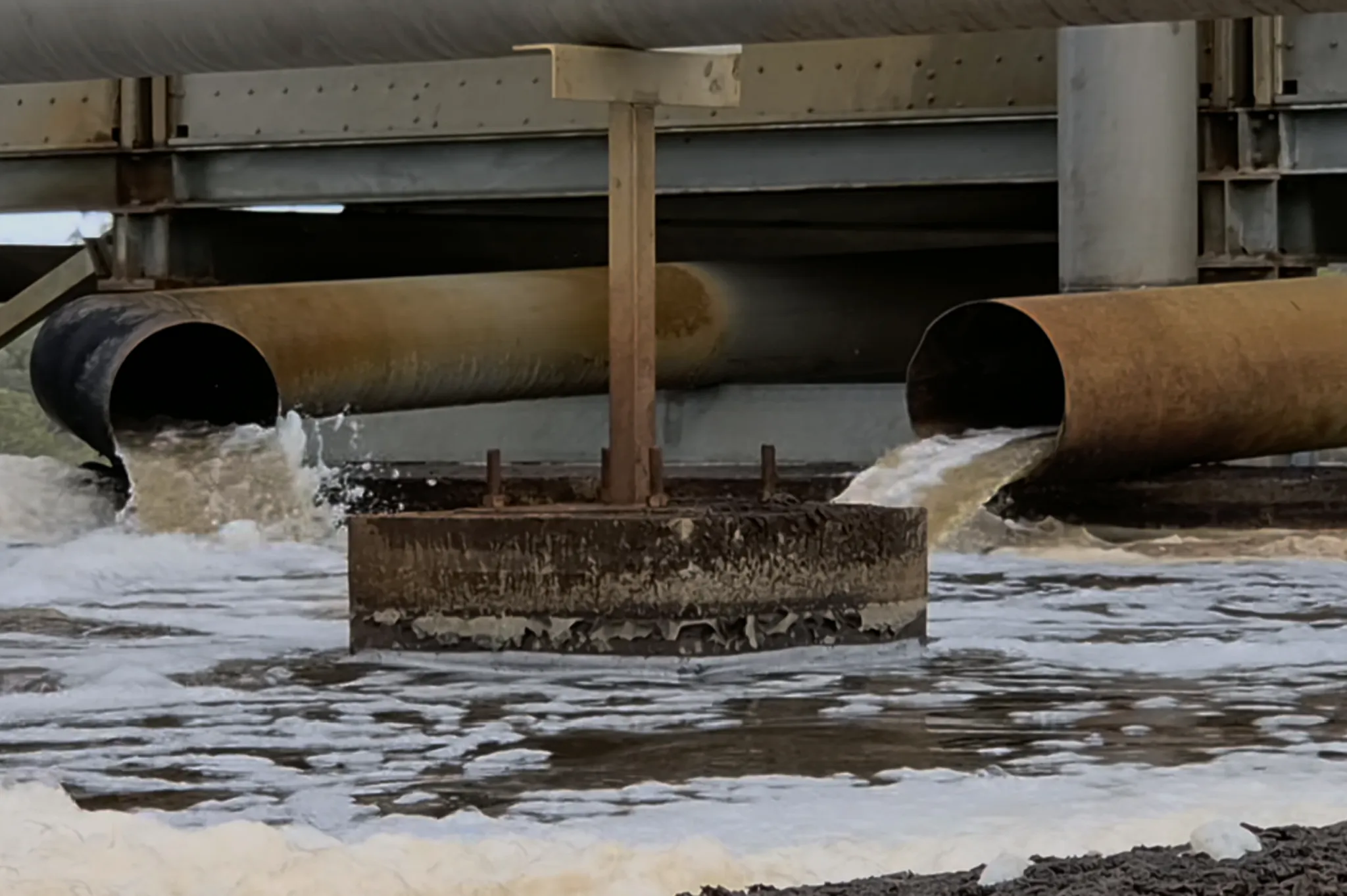
Air entrainment: the tower returns fell into the tank like a waterfall, and the gauges were jumping.
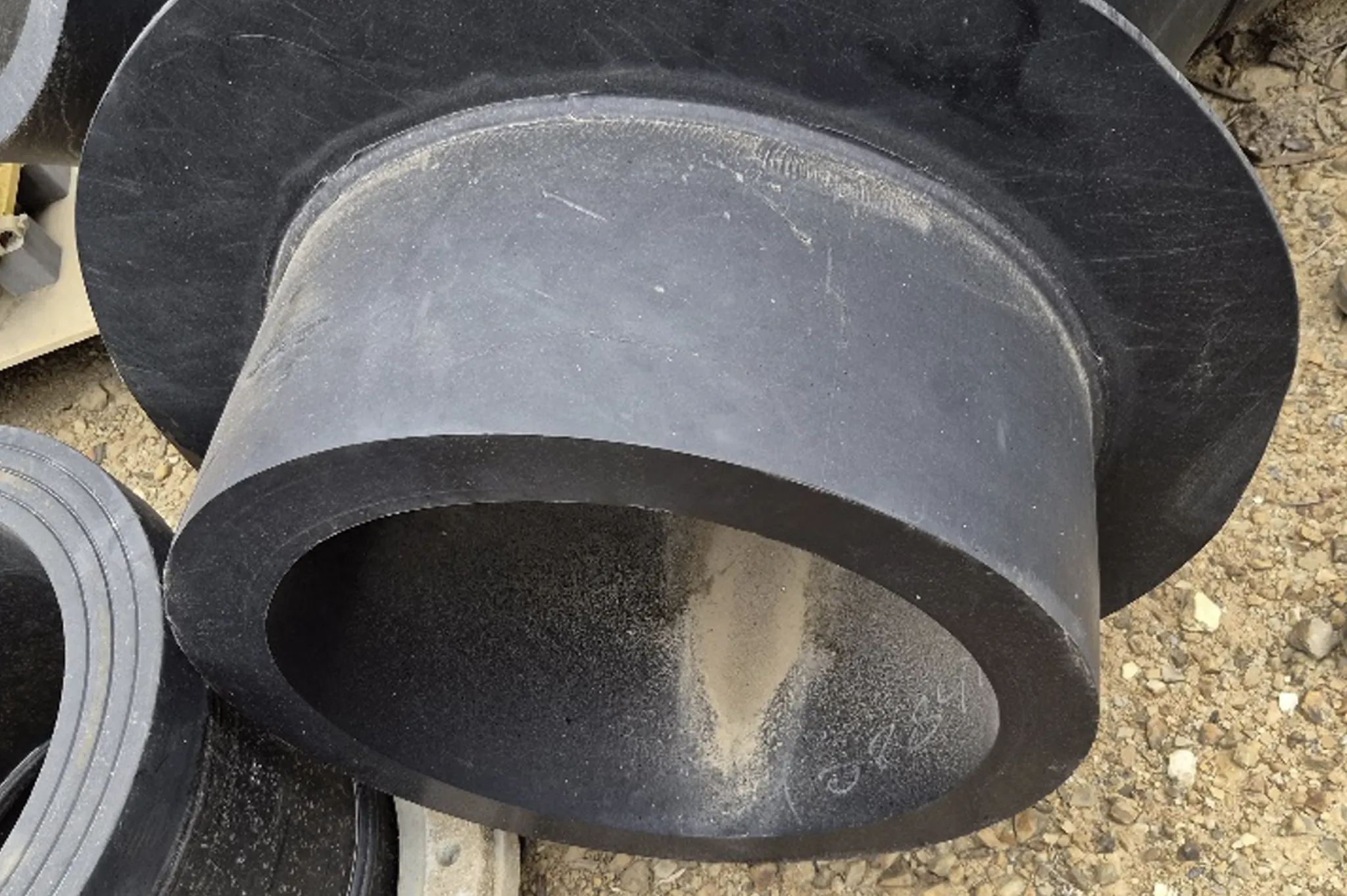
A restrictive inlet: the sharp, square-edged entry on the HDPE suction elbow added losses.
WHY AIR MATTERS According to the Hydraulic Institute, just 2% gas by volume can cut pump capacity by 10%, and 4% by more than 43%.
Cooling tower returns falling into the tank and entraining air.
500mm ID HDPE suction elbow with its sharp entry edge.
THE SOLUTION
We recommended moving the inflow pipes as far from the pump suction as possible and extending them below the water surface. As the returns run only half full, their diameter is best reduced before they go below the surface. Vertical baffles in the tank force remaining bubbles to rise before reaching the pump inlet.
At the suction elbow, grinding back the sharp entry into more of a bell-mouth eases the restriction. We also advised checking that the suction does not sit too close to the tank floor.
THE OUTCOME
Photos and sketches help, but nothing beats a site visit for the details that theory misses. The mill now has a clear, low-cost path back to its pump curve that targets the root causes rather than replacing a pump that was never the problem – saving time and unnecessary operating and maintenance costs.
TALK TO THE EXPERTS
Are you facing a similar challenge? We’re here when you are under the pump. Contact our team of experts to discuss your application.