
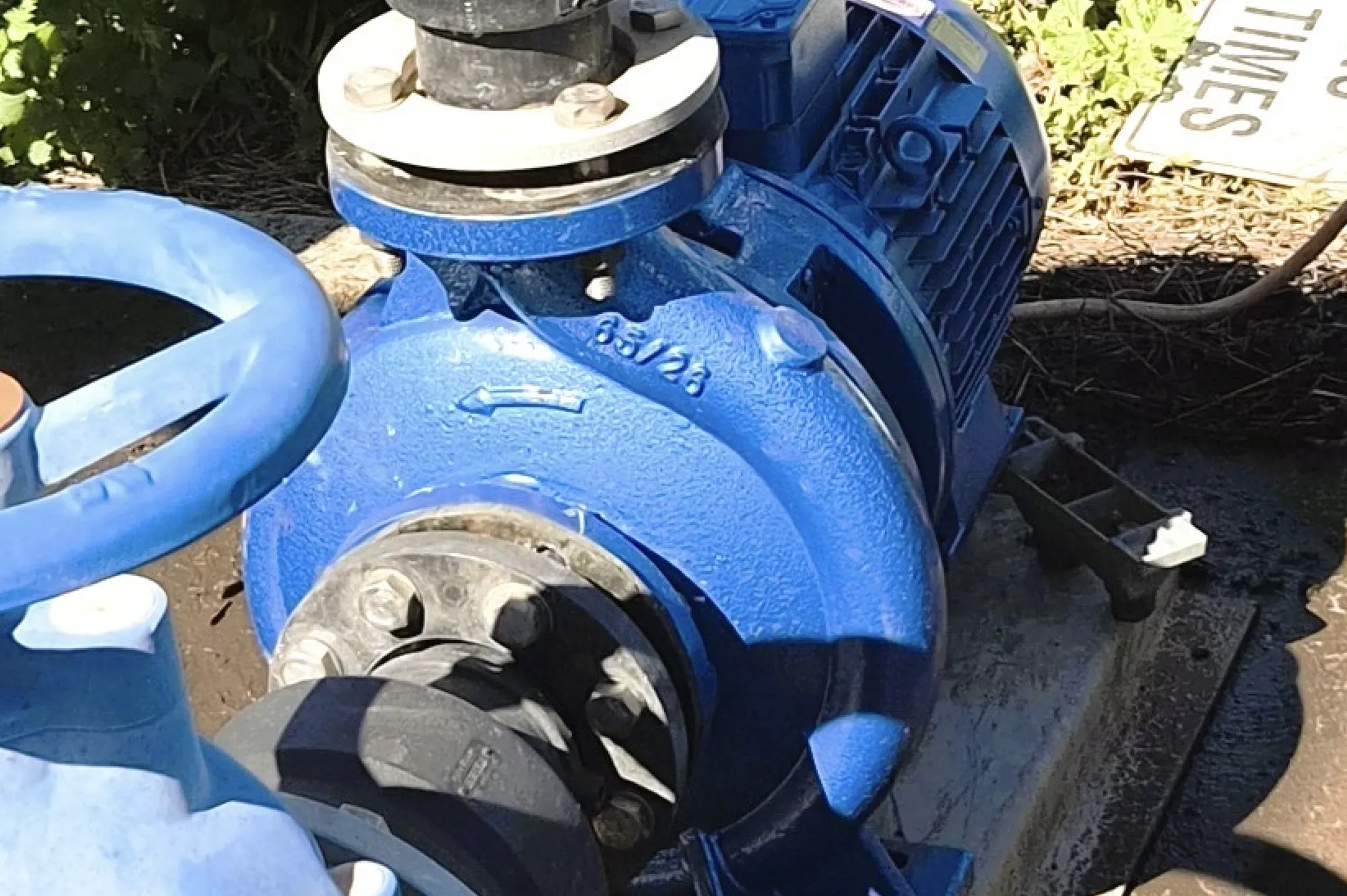
Even the best pump selection can be undermined by poor installation.
A pump may be correctly sized, selected to operate at its best efficiency point and manufactured to a high standard, but its long-term performance still depends heavily on how the pump and driver are installed.
Incorrect foundations, poorly secured or distorted baseplates, misalignment and excessive pipe strain can all contribute to premature equipment failure. Problems with pump and motor bearings, mechanical seals, shafts and couplings can often be traced back to installation issues rather than the pump itself.
Getting the fundamentals right from the beginning can make a significant difference to reliability, maintenance requirements and equipment life.
1. Start with a Solid Foundation
The pump foundation needs to provide rigid and stable support for the complete pump, motor and baseplate assembly.
An inadequate foundation can allow movement and vibration to develop during operation, placing additional stress on the equipment. The baseplate itself must also be correctly positioned, supported and securely anchored to the foundation.
A pump that isn’t properly secured at its base is already starting its operating life at a disadvantage.
2. Check the Baseplate
A baseplate may appear relatively simple, but it plays an important role in maintaining the relationship between the pump and its driver.
Bent, twisted, inadequately supported or incorrectly installed baseplates can make accurate alignment difficult—or cause alignment to change once the equipment begins operating.
Before commissioning, check that the baseplate is properly supported, secured and free from distortion.
3. Don’t Assume Factory Alignment Is Final Alignment
Factory alignment is an important quality check, but it should not be considered the final alignment of the pump and motor.
Equipment can move during transportation, positioning, installation, grouting and connection of pipework.
Final alignment should therefore be checked after the equipment has been installed in its operating position and before the pump is commissioned.
This helps ensure the pump and driver are running true under actual site conditions.
4. Keep Pipe Strain Away from the Pump
Pipework should not rely on the pump to pull it into position.
Excessive forces from poorly supported or incorrectly aligned pipework can be transferred directly into the pump casing. This can affect alignment and contribute to seal, bearing and shaft problems.
Pipework should be independently supported and correctly aligned with the pump connections before final assembly.
If significant force is required to make the pipework meet the pump, it is worth investigating why.
5. Don’t Ignore Vibration
Vibration is an important indicator of pump system health, but its cause isn’t always obvious.
Resonance deserves particular attention because a system can appear mechanically sound while still experiencing excessive vibration at particular operating speeds or conditions.
Left unresolved, vibration can accelerate wear and contribute to premature equipment failure.
6. Inspect Before You Commission
Commissioning should involve more than switching the pump on and confirming that it runs. Before start-up, the complete installation should be reviewed to ensure the equipment has been installed as intended and is ready to operate safely and reliably.
Depending on the system, this may include checking foundations and anchoring, alignment, pipework, valves, lubrication, electrical connections, instrumentation, rotation and operating conditions.
A relatively small amount of additional attention at this stage can prevent significantly larger maintenance problems later.
In a Nutshell
Correct installation is one of the most important steps in achieving a reliable pump system.
Pump selection, efficiency and equipment quality matter—but they cannot compensate for poor foundations, incorrect alignment, excessive pipe strain or unresolved vibration.
Taking a whole-of-system approach to installation and commissioning helps protect the investment made in the equipment and gives the pump the best opportunity to perform as intended throughout its service life.
FAQ
Why involve All-Pumps in pump installation and commissioning?
Pump reliability depends on more than the pump itself. All-Pumps takes a whole-of-system approach, considering the equipment, installation, pipework, operating conditions and surrounding system. Experience across a wide range of pumping applications can also help identify installation or system issues that may not be immediately apparent when individual components are assessed in isolation.
Are pump foundations really that important?
Yes. The foundation provides the rigid support required by the pump, motor and baseplate assembly while resisting the forces generated during operation. An inadequate or unstable foundation can contribute to movement, vibration, alignment problems and premature equipment wear.
Is a factory alignment certificate enough?
No. Factory alignment confirms that the pump and driver have been correctly aligned during manufacture or assembly, but conditions can change during transport and installation. Final alignment should be completed and verified once the equipment is installed on site and connected to the surrounding system.
Can poor pipework installation damage a pump?
Yes. Pipe strain can transfer unwanted forces into the pump casing and affect equipment alignment. Over time, this can contribute to problems with seals, bearings, shafts and other components. Pipework should be independently supported and correctly aligned rather than being forced into position at the pump connections.
What causes excessive pump vibration?
There is no single cause. Misalignment, imbalance, looseness, pipe strain, hydraulic conditions, inadequate support and resonance can all contribute. Effective troubleshooting considers the complete pumping system rather than assuming the pump itself is the source of the problem.
Need Support With a Pump Installation?
Whether you’re planning a new pumping system, preparing for commissioning or troubleshooting an existing installation, All-Pumps can help assess the complete application and identify practical ways to improve reliability.
Talk to All-Pumps about your pump system.