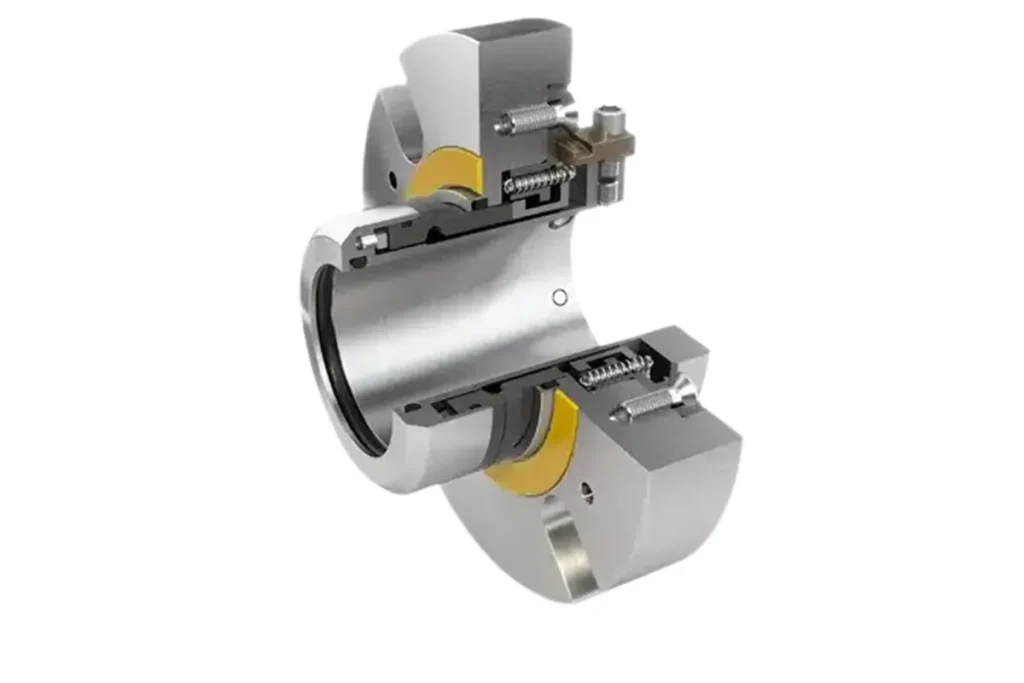
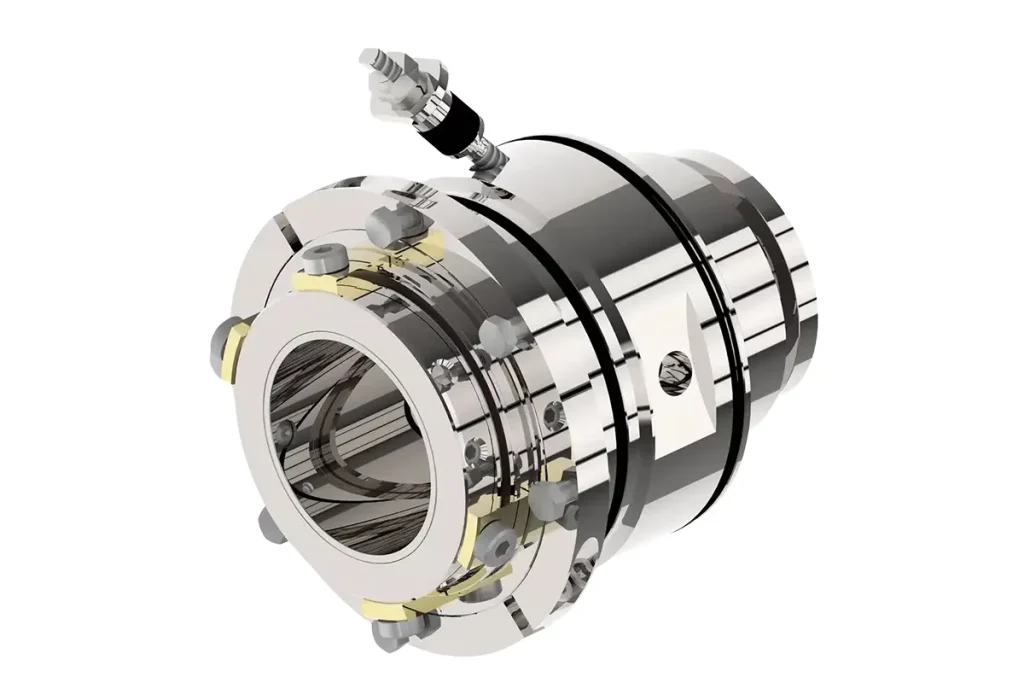
Selecting the right elastomer material is essential, as it impacts the seal’s performance, durability, and compatibility with different fluids and environmental conditions. Elastomers vary in chemical resistance, temperature tolerance, and mechanical strength, which affects their suitability for various applications.
NITRILE (N)
NBR is commonly used in mechanical seals due to its excellent balance of qualities –oil and abrasion resistance and low-temperature flexibility.
- Abbreviation: NBR/Buna-N
- Chemical name: acrylonitrile butadiene
Applications:
- Hydraulic fluids, fats, animal and vegetable oils, flame retardant liquids, grease, water and air.
- Not recommended for applications exposed to ozone, sunlight or external weather conditions; ketones, esters (including hydraulic oils); and chlorinated hydrocarbons
VITON™ (V)
Viton or FKM—a fluorocarbon elastomer that is a copolymer of vinylidene and hexafluoropropylene—is a high-performance elastomer with excellent chemical resistance. It is perfect for aggressive applications involving fuels, lubricants, and other chemicals. It can withstand temperatures ranging from -20°C to 200°C, making it appropriate for various applications.
- Abbreviation: FKM
- Chemical name: fluorocarbon elastomer
Applications:
- Hydrocarbon services, especially at higher temperatures; lubricants, halogenated hydrocarbons, silicone-based fluids, water, and acids; and are resistant to ozone and sunlight degradation.
- Not recommended for applications involving ketones, amines, low molecular weight ethers, esters, hot water, steam, and temperatures below -26°C.
EP (EPDM)
EPDM is a type of synthetic elastomer produced through the polymerisation of ethylene, propylene, and diene. This material offers several appealing properties, including high elasticity of up to 400%, a broad temperature range, and excellent resistance to many bases, acids (including fatty acids), salts, ozone, and UV rays. Additionally, it boasts a long service life of at least 50 years.
- Abbreviation: EPDM
- Chemical name: ethylene propylene diene monomer
Applications:
- Gasoline, petroleum oil and grease, and hydrocarbon environments; heat, water, steam, alcohols, ketones, engine coolants, alkali, mild organic and inorganic acids and bases, oxygenated solvents, ozone and UV sunlight.
- Not recommended for gasoline, petroleum oil, grease, and hydrocarbon environments.
TEFLON (PTFE)
PTFE, commonly known by its trade name Teflon, is a high-performance plastic and the most widely used fluoropolymer. It boasts a remarkable range of operating temperatures, excellent resistance to highly aggressive chemicals, low friction, and non-stick properties, making it an effective sealing material. However, Teflon’s primary drawback is its relatively low wear resistance—it can be easily scratched and damaged.
- Abbreviation: PTFE
- Chemical name: polytetrafluoroethylene
Applications:
- Non-filled PTFE (virgin PTFE) is used where mechanical properties are not the most important requirement. It is ideal for highly aggressive applications where elastomeric compounds are not suitable. It is also used in batch processes where the changing chemical or process conditions make it impossible to use a single elastomer grade.
- Filled PTFE (encapsulated PTFE) are o-rings with an inner elastomer core, commonly Viton or EPDM and an outside coating of PTFE.
KALREZ® (K)
FFKM provides exceptional chemical resistance and can withstand extremely high temperatures and harsh chemicals. It is considered the top choice for highly demanding applications. However, because of its use in challenging conditions, extra care is needed when handling FFKM elastomers.
- Abbreviation: FFKM
- Chemical name: perfluoro elastomer
Applications:
- FFKM resists thousands of chemicals, including concentrated nitric acid, sodium hydroxide and ethylene diamine.
- Demanding applications such as semiconductor production, chemical processing, and aerospace.
Aflas® (A)
AFLAS fluoroelastomer materials are ideal for parts and components that need to perform reliably in the world’s harshest environments. They are used to fabricate o-rings, gaskets, seals, and packings.
- Abbreviation: TFE/P
- Chemical name: tetrafluoroethylene-and propylene
Applications:
- TFE has excellent oil resistance, making them a suitable choice for oil and gas applications.
- TFE resists strong bases and acids and withstands high continuous service temperatures, making them ideal for various chemical and food processing applications.