

Nexus
Nexus boasts a powerhouse of industrial pumps that are engineered to meet the toughest fluid transfer requirements in almost any sector. Featuring a robust design fabricated with modern technology principles, the Nexus Centrifugal Pumps are a popular choice for many industrial and municipal applications.
The trouble-free operation and effective flow rate at low voltages make these pumps cost-effective. Their wide selection of materials makes them compatible with most types of fluids. So, in every fluid handling situation, there’s always a Nexus pump for it.
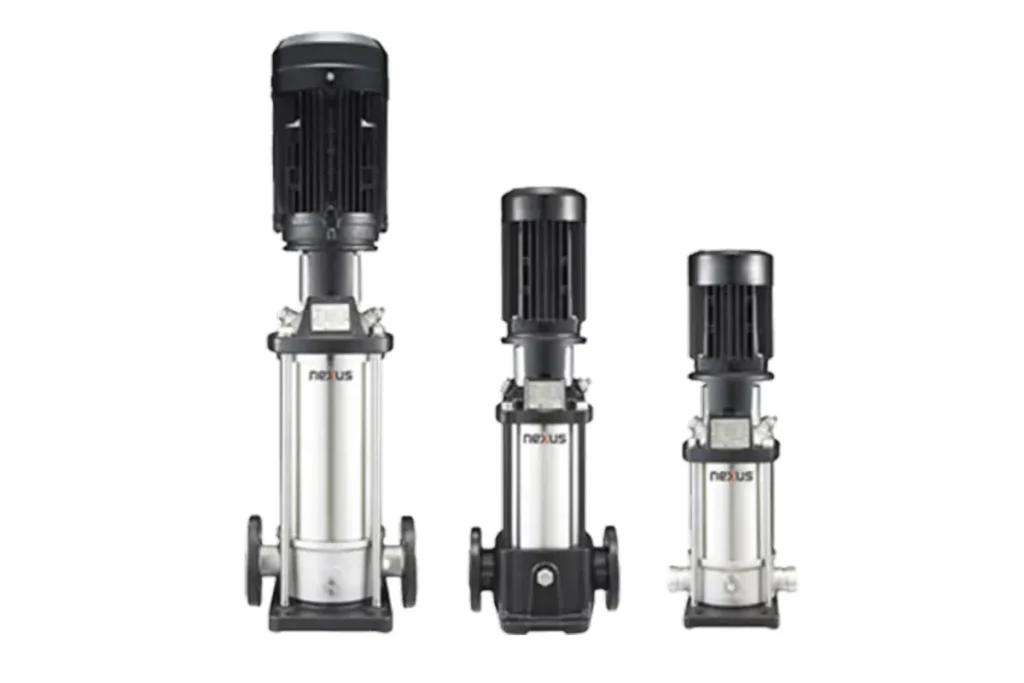
Nexus' Vertical Multistage Pumps & Booster Set
Nexus vertical multi-stage booster pump systems are designed for high pressure and/or high flow applications. They are particularly effective in delivering pressurized water to high-rise buildings, manufacturing complexes and other large facilities. Industrial and municipal plants benefit from booster pump sets for efficient delivery of fresh water and removal and treatment of wastewater.
These vertical booster pumpsets can be regulated by a variable frequency drive that controls the pump operation to maintain constant pressure regardless of varying demand and fluctuation in incoming pressure. Pumps in the set operate in a synchronized manner to supply the specified flow and pressures.
Features & Benefits
- Require minimal maintenance, increasing uptime
- Non-self priming, close coupled
- Flanged or with Victaulic coupling
- Stainless steel impellers, chambers, pressure casing
- Equipped with cartridge type mechanical seal
- Wide range of pump sizes and number of stages
Available Options
- Spare parts
- Baseplate
- Motor options
- Seal material options
Key Specifications
Flow and pressure depend on the number of stages. Please get in touch with our team to get the exact specification according to your requirements.
Principle of Operation
Multistage pumps are centrifugal pumps with two or more stages. Each stage contains one impeller and a diffuser. The impellers, though, are connected by a single shaft only. As the fluid enters the first impeller, it gains higher velocity and is deflected to the diffuser of the next stage. Here, the fluid gains pressure. The fluid is then rotated by the next impeller at the next stage causing it to rise to the tips of the impeller and fall to the next stage where it gains additional pressure. The process goes on until the fluid reaches the last stage. The fluid then exits the pump through the discharge port with the highest pressure the pump can possibly generate. That said, multi-stage pumps are ideal for pressure boosting and in applications with high head requirements.
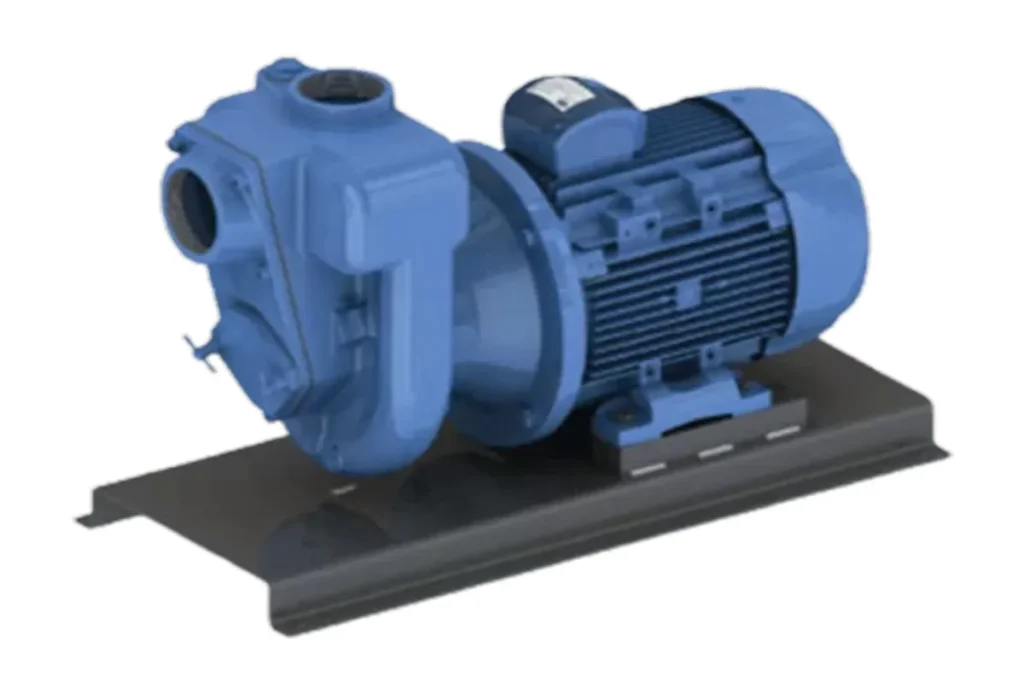
Nexus' Trash Pumps
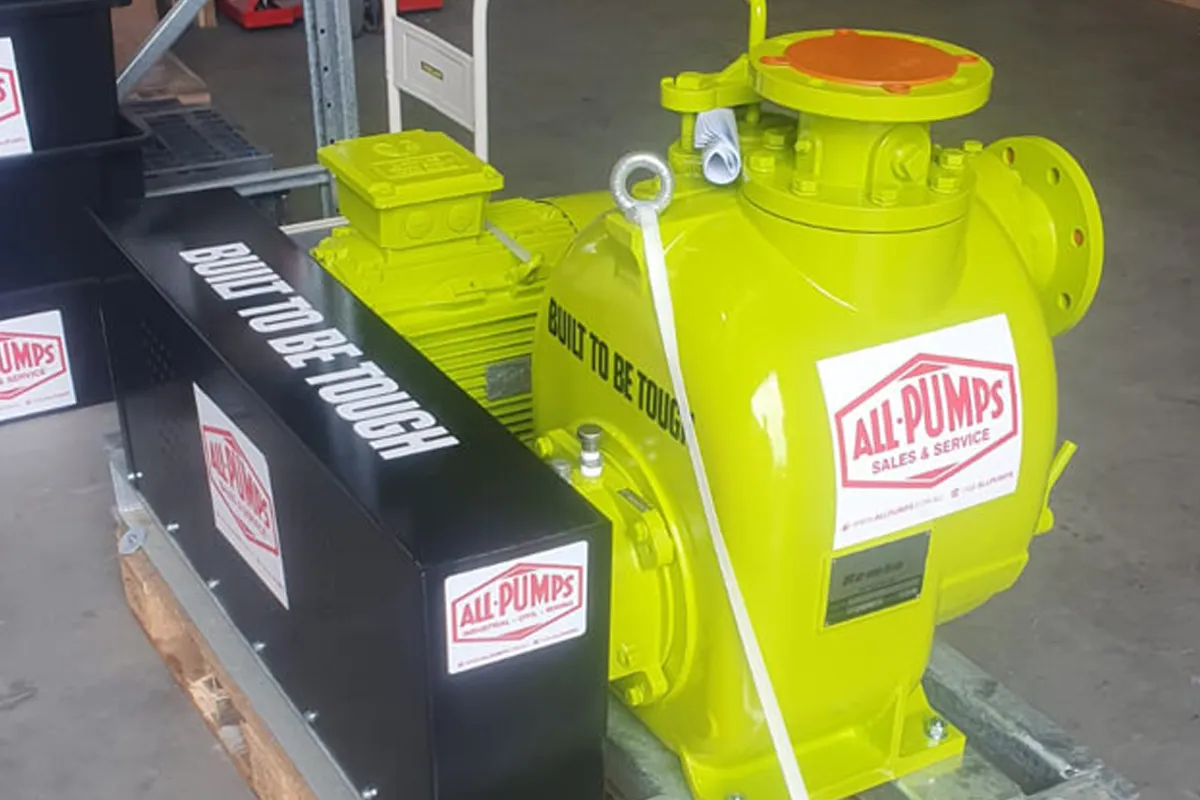
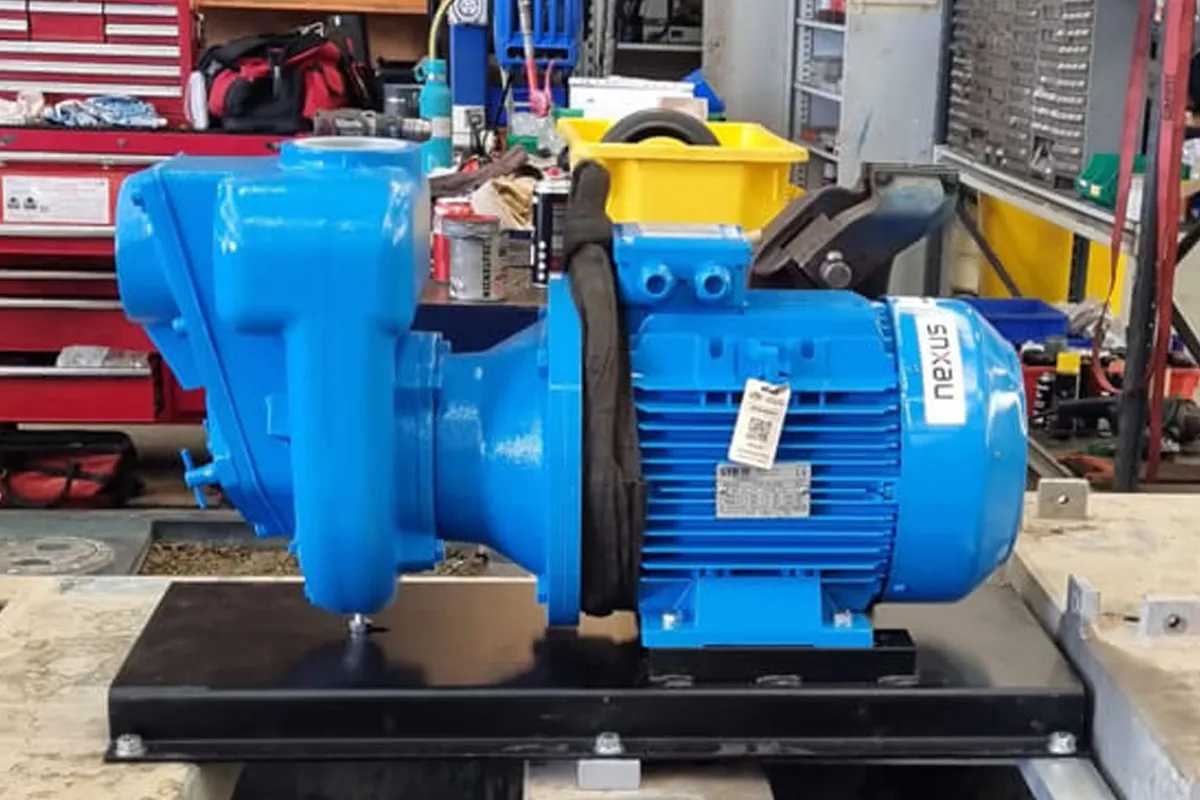
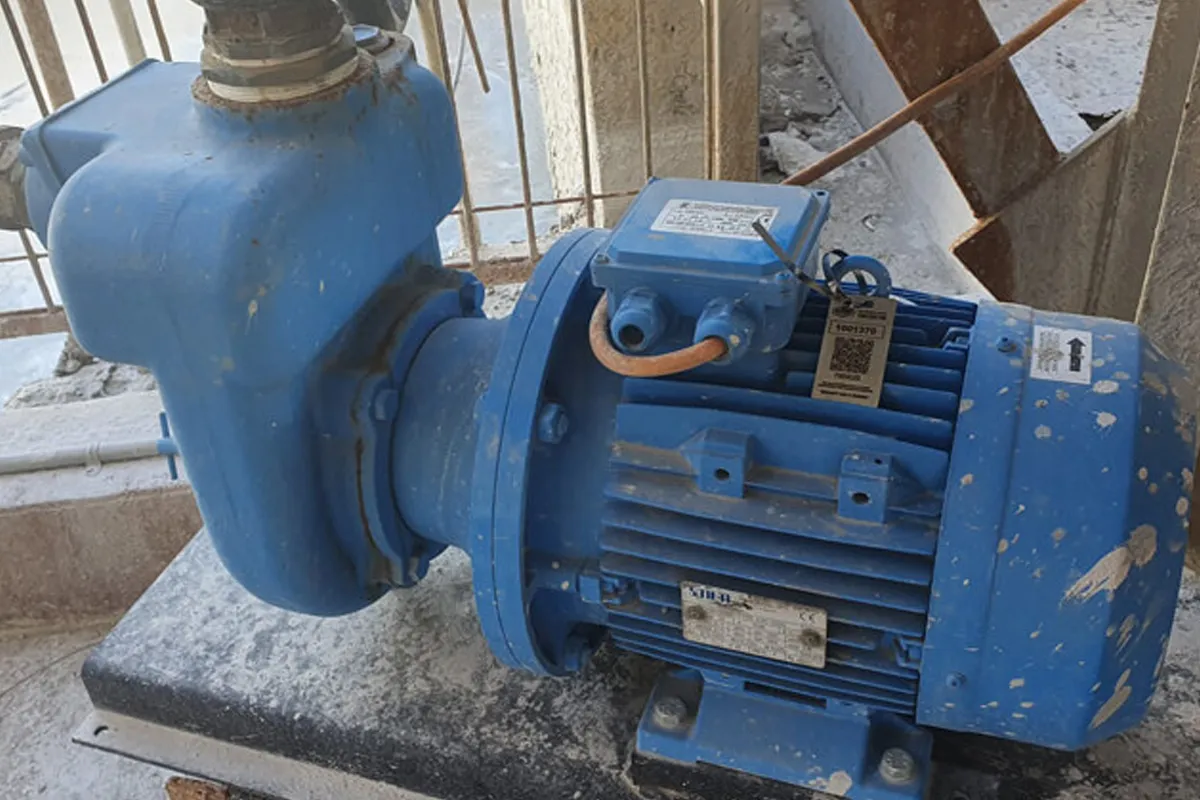
The Nexus semi-trash pumps are close-coupled, self-priming centrifugal types that are electric motor-driven. They are engineered to handle large amounts of water that contains hard and soft solids such as mud, leaves, twigs, sand, and sludge. These pumps are also capable of processing materials with suspended particulates that would clog standard centrifugal pumps.
Although they can allow the passage of solids with sizes up to 24 mm only, they do not clog and finish the job in a minimum amount of time.
Features & Benefits
- Cast iron and stainless steel construction for longer service life
- Open non-clog impeller
- Uses TEFC three-phase electric motor
- Excellent solid pumping
- Strong suction lift
- Silicon carbide mechanical seals for increased abrasive resistance
Available Options
- Seal options
- Spare parts
- Baseplate
Key Specifications
Flow, pressure, and other important technical data will depend on your specific requirements. The pumps are customisable and can be designed according to your application. Please get in touch with our team to get the exact specification according to your needs.
Applications
- Industrial waste
- Livestock effluent
- Public sewage
- Abattoir waste
- Piggeries, chicken processing, feed lots
- Wash bay water recirculation
- Batch plant recirculation
- Mineral processing
- Quarry dewatering
Principle of Operation
Trash pumps use centrifugal force to move a fluid. In this case, a Nexus trash pump is also self-priming. In the priming stage of the self-priming principle, the impeller rotates to generate vacuum at the center. This draws air into the pump from the suction. Simultaneously, the pump creates a cylindrical ring of fluid on the inside of the casing. This causes a gas-tight seal to form. Meanwhile, air bubbles are trapped in the fluid inside the pump and are forced out through the discharge port. As soon as air is expelled, the liquid returns to the pump. As the fluid gradually rises and all the air is discharged, the normal fluid pumping using centrifugal working principle commences.
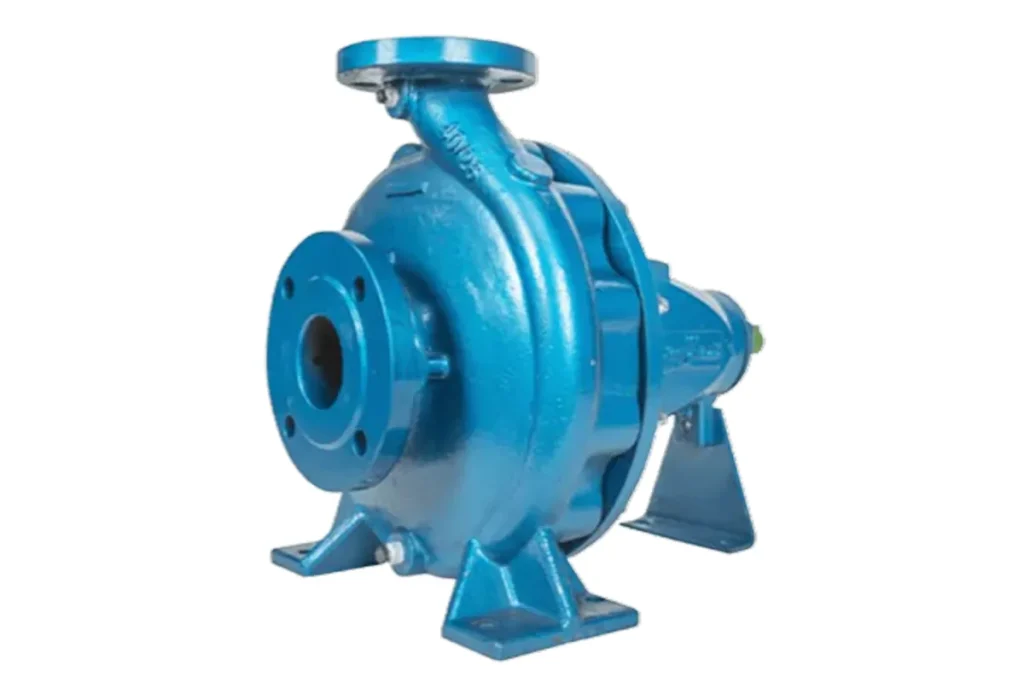
Din Close-Coupled Pumps
Nexus offers a range of close-coupled centrifugal pumps that are designed based on the DIN Standard EN733 (formerly 24255). The collection covers over 40 pump sizes, achieving up to 145 meters of head and over 22000 litres per minute of flow. The cost-effective design of these pumps promotes space-saving and eliminates problems associated with baseplate and coupling alignment leading to lower installation and capital costs.
The hydraulic components of the Nexus DIN pumps are interchangeable within the close-coupled range, therefore saving stock holding of spare parts within factories or buildings.
Features & Benefits
- Compact, economic, space-saving construction
- No shaft alignment required
- Outstanding hydraulic performance
- High-efficiency impeller
- Easy maintenance, Low maintenance cost
- Easy to install without a heavy foundation
Available Options
- Casing material
- Impeller material
- Range of mechanical seals
- Pack gland
- Spare parts
Key Specifications
Flow, pressure, and other important technical data will depend on your specific requirements. The pumps are customisable and can be designed according to your application. Please get in touch with our team to get the exact specification according to your needs.
Applications
- Liquid Transfer
- Air Conditioning
- Refrigeration
- Fire Protection
- Drainage
- Irrigation
- General Industry
- Petroleum Products
- Water Treatment and Supply
- Wastewater and Effluent
- Chemical Transfer
Biodiesel Processes
Principle of Operation
Centrifugal pumps use the transfer of rotational energy from one or more impellers to the fluid to increase its velocity and pressure. The fluid is fed into the pump, hitting the eye of the impeller. Here, fluid is rotated, thereby gaining more speed. The fast rotation of the impeller causes the fluid to be deflected to the tips of the impeller and falls off to the volute. Here the fluid loses speed but gains pressure, causing it to be directed towards the pump outlet.
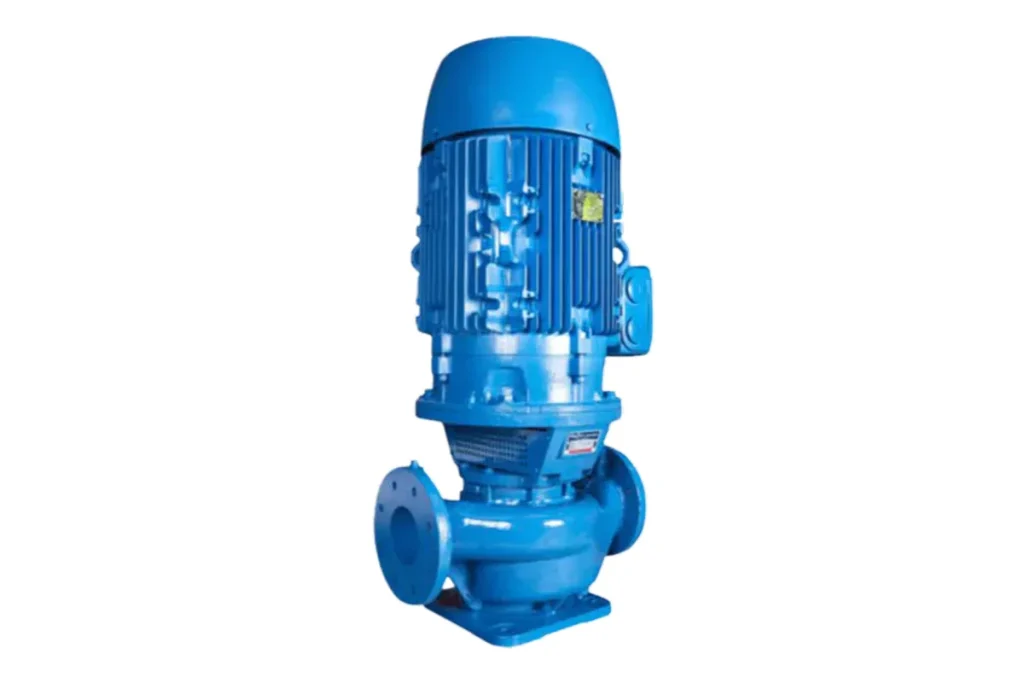
Din Long-Coupled Pumps
The Nexus long-coupled, end suction, single-stage horizontal centrifugal pump is standardised to EN 733/DIN 24255 and can be used for a vast range of applications in the industrial and marine markets. The long-coupled design means that there is a large space between the pump and motor, this, in turn, protects the motor from fluid ingress in the case of a seal failure.
The dimensions of the pumps are based on DIN 24255 for easy retrofitting to existing pipework and replacing other DIN models.
Features & Benefits
- Back Pull‐Out design for simple and quick maintenance
- Volute casing is fitted with a replaceable wear ring
- Double shrouded hydraulically balanced impeller
- Robust and designed for continuous use
- Interchangeable spare parts within the range reduce stock holding
- Wearing rings prevent wear and improve pump efficiency
Available Options
- Casing material
- Impeller material
- Range of mechanical seals
- Wear ring material
- Pack gland
- Spare parts
- Baseplate
Key Specifications
Applications
- Aquaculture
- Ballast
- Boiler Feed
- Cargo
- Cooling
- Fire Fighting
- Fuel Transfer
- Fume Scrubber
- Grey Water
- Irrigation
- Marine Fuel
- Sea Water Cooling
- Sea Water Injection
- Sea Water Service
- Swimming Pool
- Thermal Oil
- Wastewater
- Water Circulating
- Water Transfer
Principle of Operation
Centrifugal pumps use the transfer of rotational energy from one or more impellers to the fluid to increase its velocity and pressure. The fluid is fed into the pump, hitting the eye of the impeller. Here, fluid is rotated, thereby gaining more speed. The fast rotation of the impeller causes the fluid to be deflected to the tips of the impeller and falls off to the volute. Here the fluid loses speed but gains pressure, causing it to be directed towards the pump outlet.
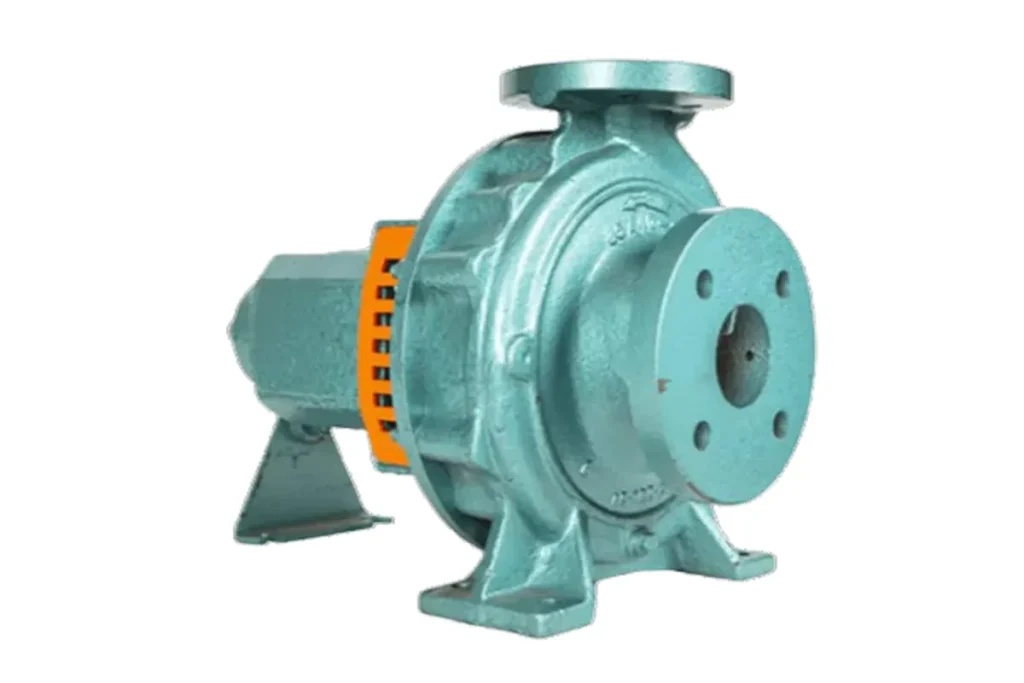
ISO Close-Coupled Pumps
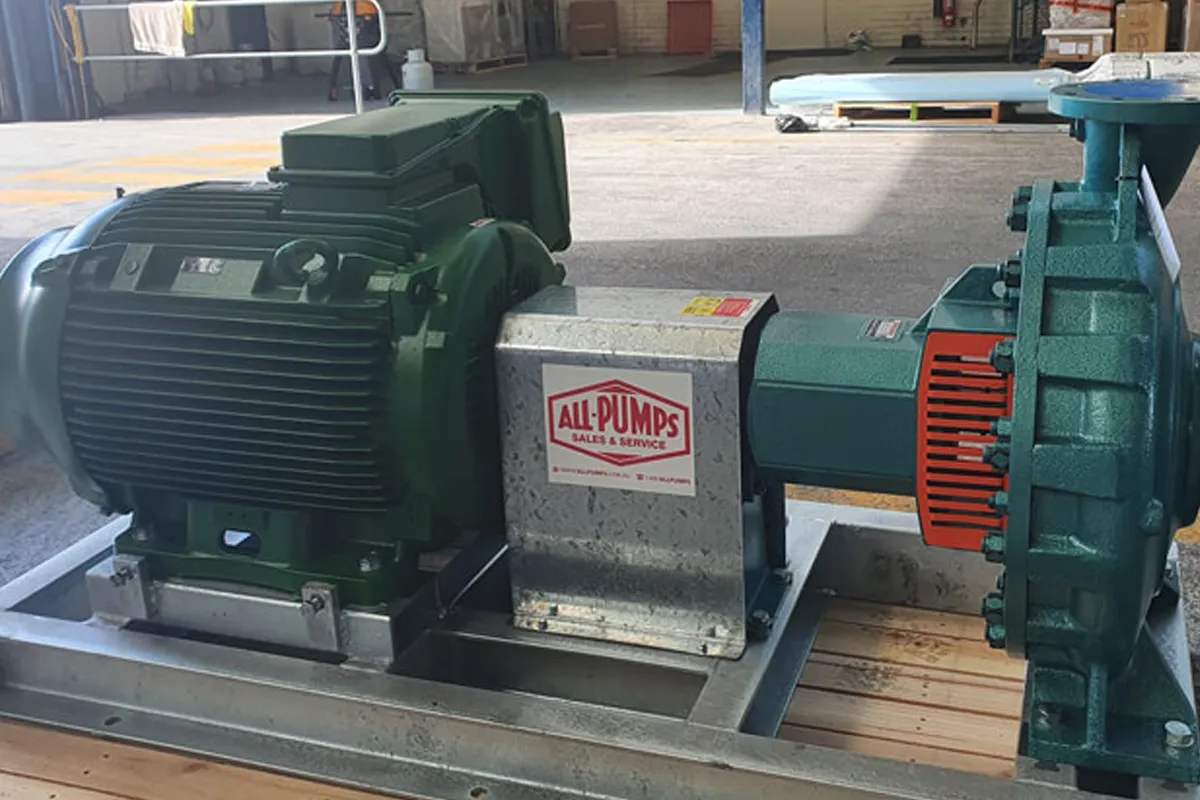
Nexus ISO end suction, close-coupled centrifugal pumps are single-stage and designed according to ISO 2858 standards and are interchangeable with other ISO pumps. They use the standard TEFC foot and flanged electric motors and are particularly suited to confined spaces where long-coupled units may not fit. The pumps eliminate costly couplings and the alignment problems sometimes associated with long-coupled models.
With these pumps, users also get many options for construction materials, pump discharge positions, and operating range.
Features & Benefits
- Back Pull‐Out design for simple and quick maintenance
- Compact, economical, space-saving design
- No shaft alignment required
- Optimised hydraulics, reliable performance
- Long life cycle, reduced maintenance costs
- High-efficiency, rugged impeller
Available Options
- Casing material
- Impeller material
- Range of mechanical seals
- Spare parts
- Baseplate
Key Specifications
Applications
- Air Conditioning
- Water Pressure Boosting
- Heating and Cooling
- Liquid transfer
- Water Treatment and Supply
- Effluent
- Irrigation and Drainage
- Petroleum Products
- General Industry
Principle of Operation
ISO Long-Coupled Pumps
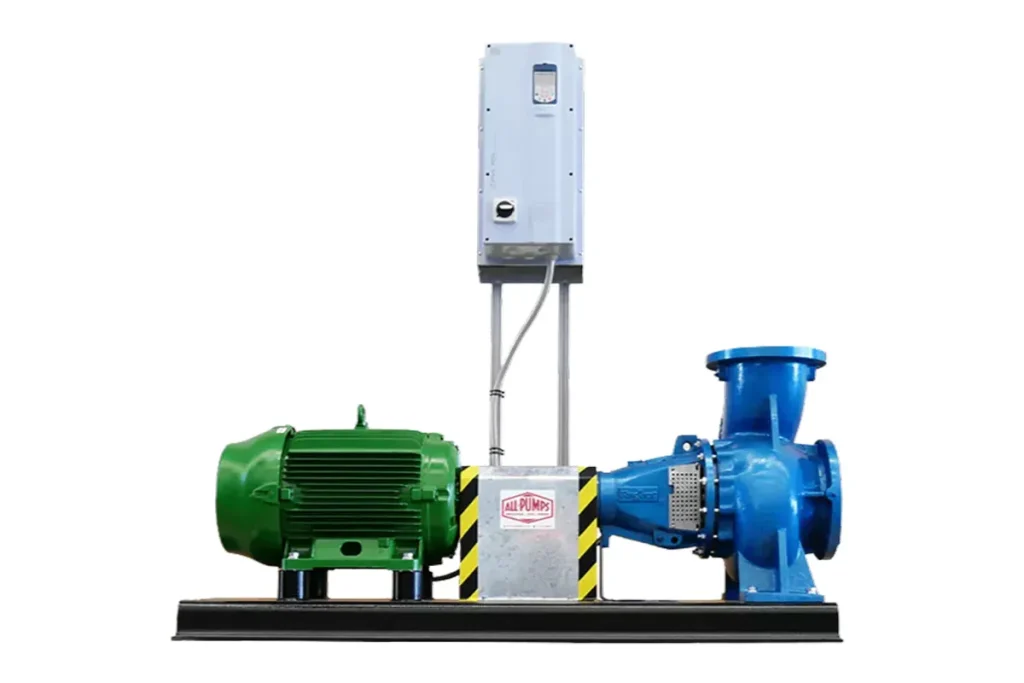
The nexus range of single-stage end-suction centrifugal pumps that are designed to the International Standard ISO 2858 is preferred by many Australian industries for their rugged construction and reliable performance. These heavy-duty workhorses offer high flow and high-pressure capabilities and can be used for a wide range of applications in the industrial, municipal, and marine markets.
They are efficient at pumping low viscosity clean or slightly contaminated fluids without the presence of large or fibrous solids.
Features & Benefits
- Dimensionally interchangeable with other ISO pumps
- Back Pull‐Out design makes maintenance faster and easier
- Hydraulically and dynamically balanced impellers
- Wearing rings prevent wear and improve pump efficiency
- Durable and dependable for continuous use
- High strength shaft
Available Options
- Casing material
- Impeller material
- Range of mechanical seals
- Wear ring material
- Spare parts
- Baseplate
Key Specifications
Flow, pressure, and other important technical data will depend on your specific requirements. The pumps are customisable and can be designed according to your application. Please get in touch with our team to get the exact specification according to your needs.
Applications
- Air Conditioning
- Water Pressure Boosting
- Heating and Cooling
- Liquid transfer
- Water Treatment and Supply
- Effluent
- Irrigation and Drainage
- Petroleum Products
- General Industry
Principle of Operation
Nexus' Split Case Pumps
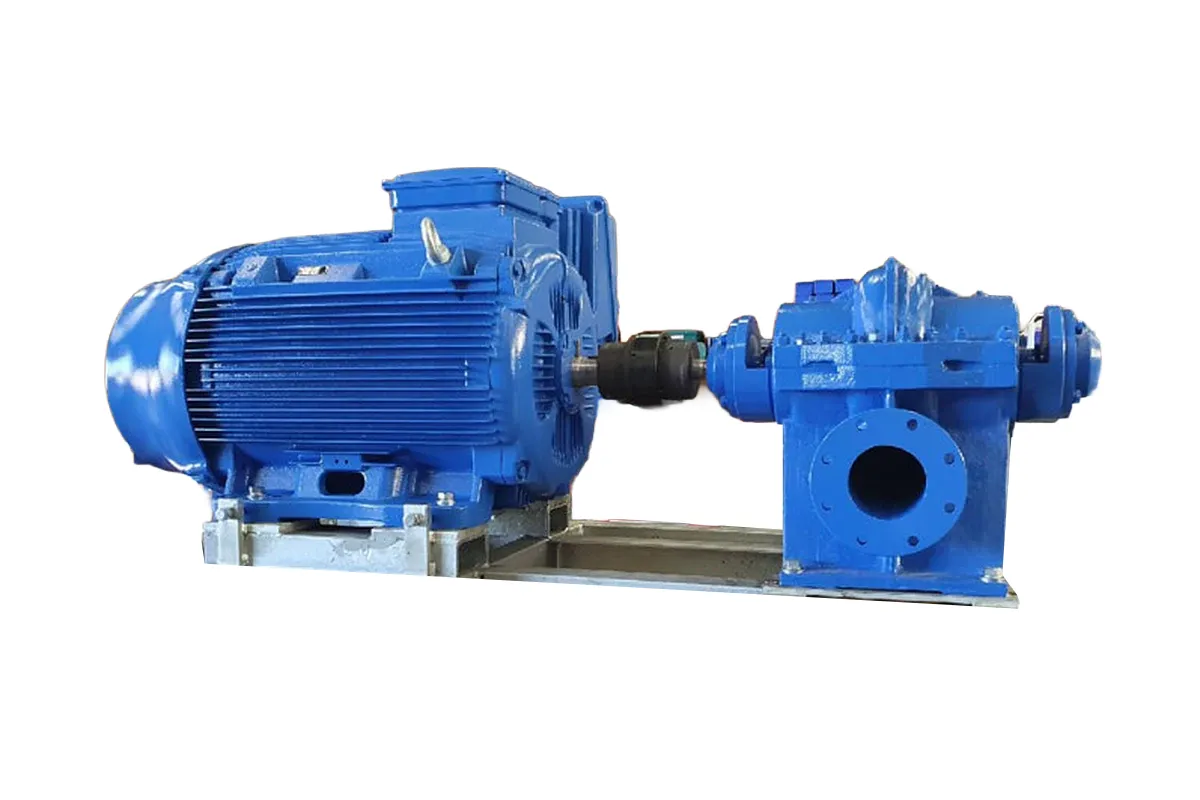
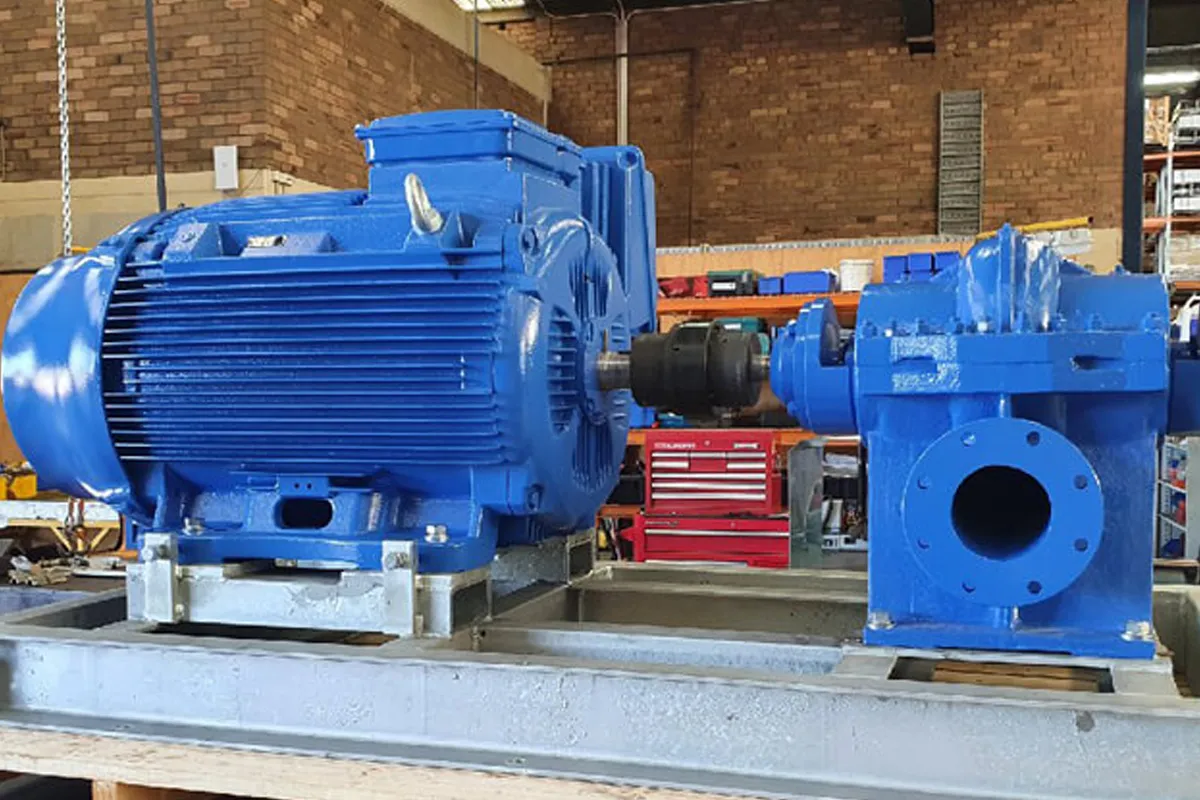
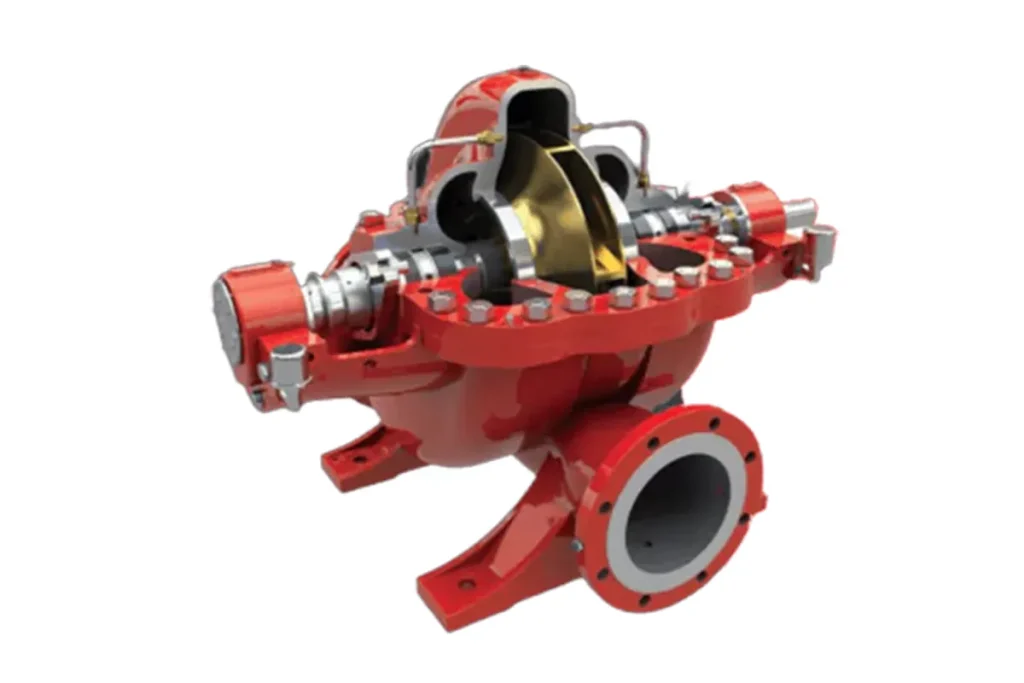
Nexus’ double suction axially split case centrifugal pumps or the ES pumps are created for producing high volume flows. This is due to the impeller being of back-to-back design, where its design is like two impellers mounted together within a double volute. The Nexus split case pumps are known to be highly efficient and consequently used in pipelines both for water and oil where pumps operate continuously, transferring high amounts across large distances.
And being horizontally designed, they are easier to maintain than the radially split pumps as the motor does not need to be removed during servicing.
Features & Benefits
- Rugged casing with stiffeners
- Fully sealed shaft without contact with the pumped fluid
- Simple structure and easy to maintain
- Closed circulate cooling system in inner seal housing
- No axial hydraulic thrust due to the back-to-back, double-suction design
- Improved pump efficiency with no power lost in balancing hydraulic thrust
Available Options
- Seal options
- Spare parts
- Baseplate
Key Specifications
Applications
- Civil water supply
- Construction
- Air conditioning
- Irrigation
- Marine
- Fire fighting
- Power station
- Industrial
- Irrigation
Principle of Operation
Split case horizontal pumps are designed with casings that come apart. The design allows for the top part of the case to be removed without disturbing the driver or associated piping. This allows for quick and easy inspection and repair of the rotor as needed. Split case horizontal pumps are usually axially-split. That is, the flange where the case splits is in the plane as the pump axis. As for the operation, they follow the conventional centrifugal pump principle where fluid enters into the impeller eye and is cast out by centrifugal force along its circumference through the impeller’s vane tips. The action of the impeller increases the fluid’s velocity and pressure and directs it towards the pump outlet.
Nexus' Slurry Pumps
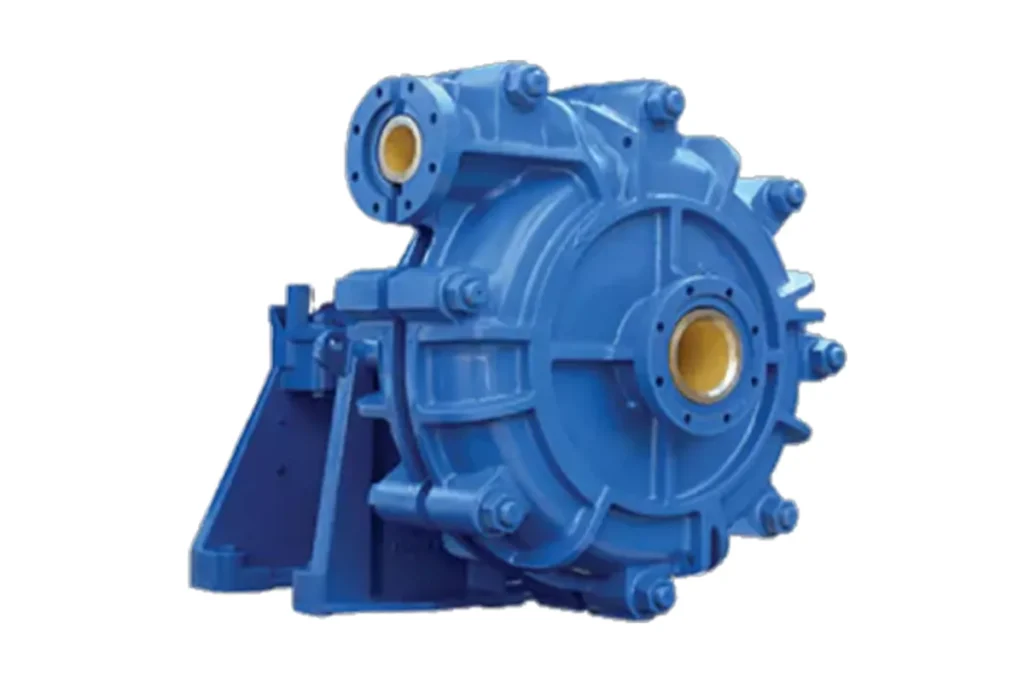
Nexus offers a range of slurry pumps available in horizontal or vertical designs. Their rugged construction allows them to withstand arduous transfer duties, including moving abrasives, high-density slurries, and large particles. The range includes the MAH and EK-HH horizontal pumps and the MSP vertical slurry pumps.
All of which boast optimised design and construction to meet the most stringent requirements set by different industries for handling slurries and to minimise pump downtime.
Features & Benefits
- Enhanced abrasion resistance for longer life
- High-performance impellers for higher efficiencies
- 27% Chrome white iron for excellent wear resistance
- Outstanding suction lift
- Simple, easy to operate and maintain
- High flow and high head
Available Options
- Material options
- Drive options
- Motor options
- Seal options
- Spare parts
Key Specifications
Applications
- Mining industry
- Processing industry
- Manure slurry
- Dewatering
- Lift station
- Wastewater
- Coal Washing
- Heavy industrial applications
Principle of Operation
Nexus HydroWhiz VSD Pump Controller
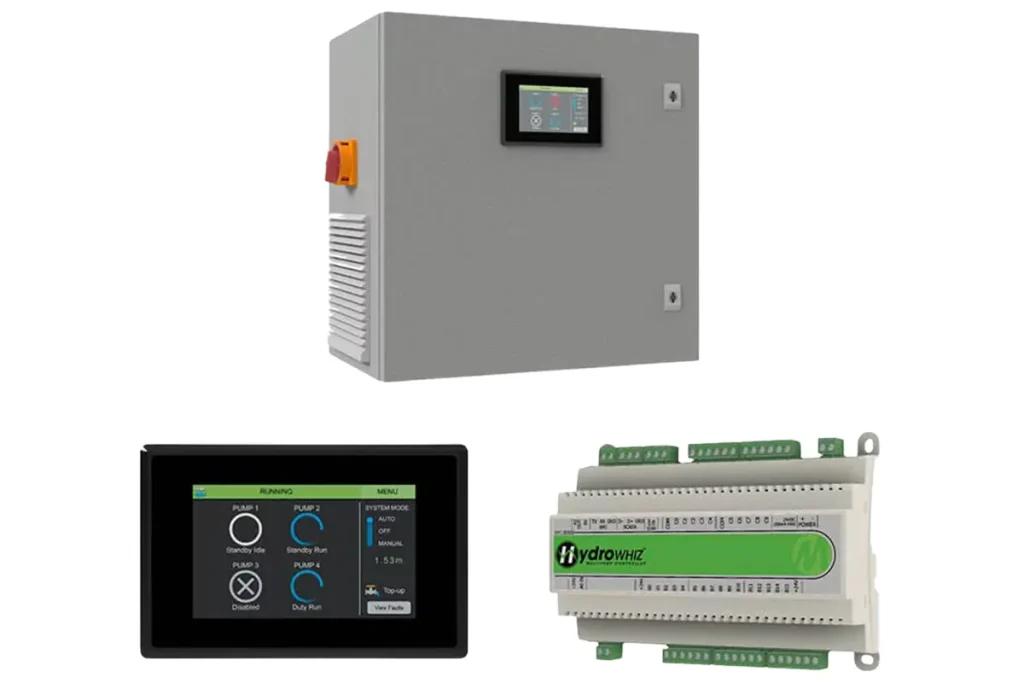
FPC-63220 HYDROWHIZ CONTROLLER FUNCTIONS
Dual Pump Controller
- Can control and monitor two pumps in duty, standby, or duty assist
- Can control up to a maximum of 6 pumps in any duty, duty assist or standby configuration.
Manual Control
Manual modes available for system and pumps with a 10-minute timeout before switching back to auto mode
Level Control Mode
Controlled by 4-20mA hydrostatic level transducer or low voltage floats
Pump Control Enclosure
IP44 standard rated, powder coated mild steel enclosure with an inner door for outdoor installation with IP56 options available
Auto Restart Pump Controller
Staggered Pump Start and Stop — eliminates extreme current draw and minimizes water hammer
Pressure & Temperature
Pressure and temperature control modes, Maintain minimum level function, Tank top up valve control, Jacking pump control, Sleep assist speed minimize, Pipe fill function, and more.
Interface Features
- Pump Control Main Screen
Shows system status
Auto/off manual mode controls - Pump Screen
Shows system status and logged data
Auto/off/manual control - Alarm Screen
Mute/reset functions
Shows date and time-stamped historical faults - Logged Data
Shows system events and fault counts, pump starts, run hours - System Diagnostics
Analog feedback value trend graph
System diagnostics for fast and easy fault finding
FAULT PROTECTION FEATURES
- High and Low-level Protection
Alarm and/or shutdown on high and low level - Maximum Run Protection
Activates after pumps run at max speed for 30 mins - Pump Overload Protection
Shuts down pump/s on overload, with automatic duty alternation - Pump VSD Fault Protection
Alerts during short circuit, overload, supply phase loss, under/over voltage, and other protections - Pump Cycle Protection
Auxiliary tank level protection, Anti-seize protection, Pump cycle protection, No flow protection