
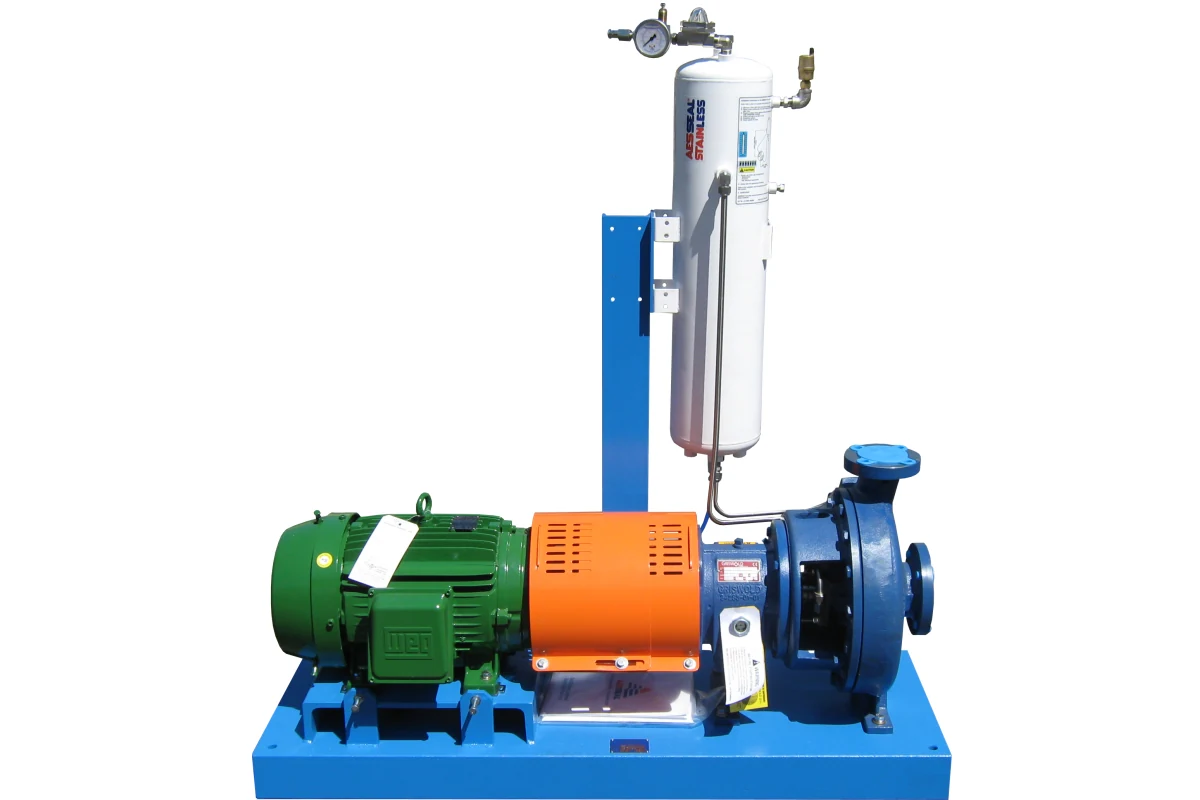
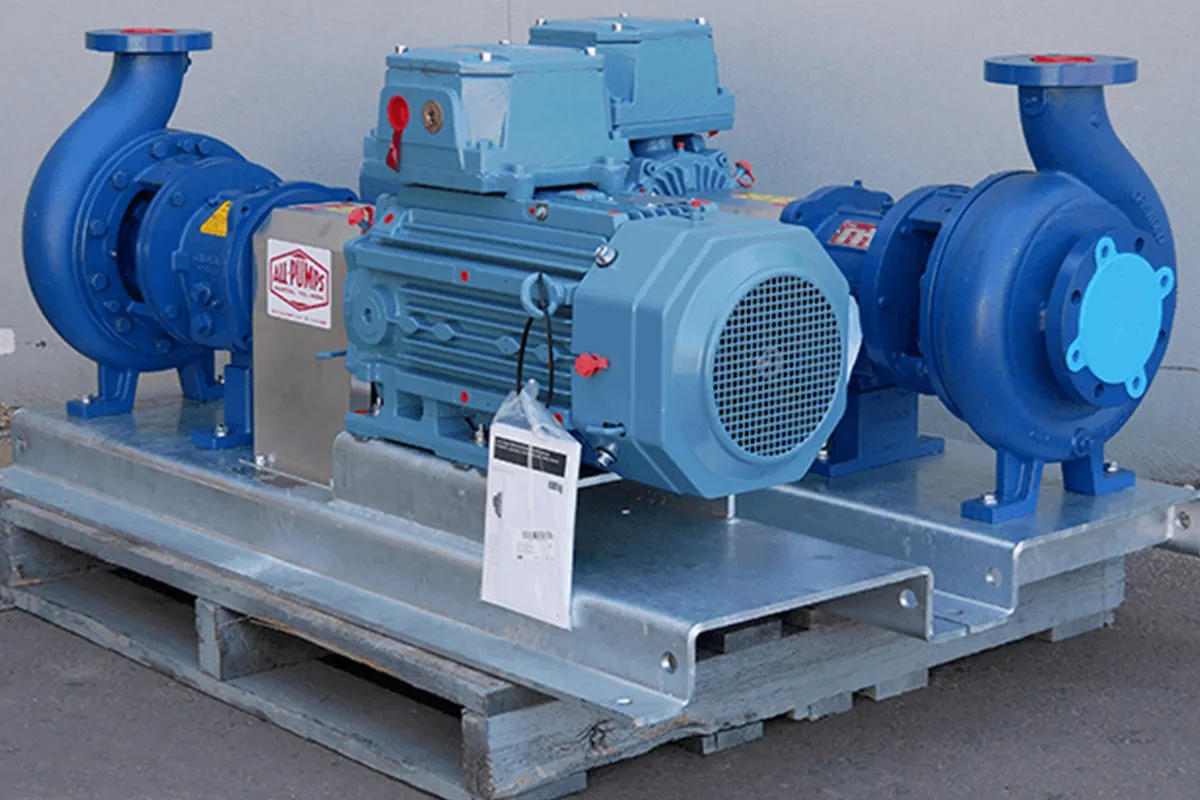

Griswold
A brand by PSG, Griswold leverages unique design features, fast delivery, and great value in all its pump offerings. The company manufactures pumps for process, industrial, irrigation and recreational water. Griswold pumps and peripheral products include ANSI process pumps, end suction centrifugal pumps, vertical turbine pumps, submersible turbine pumps and self-priming units helping petroleum, petrochemical, wastewater, pulp and paper industries in equipment selection, critical delivery scheduling and timely field service assistance.
Griswold pumps combine the durability, reliability and speed of delivery needed for pumps operating in many critical applications across the globe.
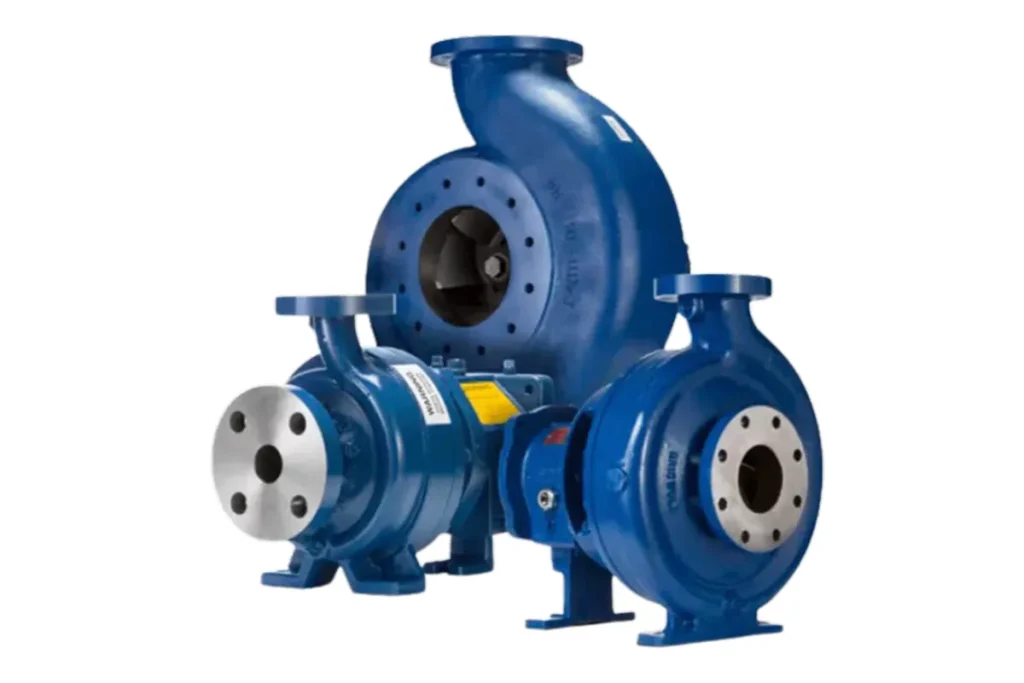
Griswold's 811 ANSI Series
The 811 ANSI Pumps from Griswold are designed for versatility and lasting performance. They are also engineered to be easy to maintain and repair. Many of the pump components are interchangeable with other ANSI models to simplify inventory and reduce costs. The series is available in a variety of sizes, capacities, and materials to accommodate practically every fluid transfer application.
Each ANSI pump is subjected to Griswold’s strict quality assurance programs to ensure the highest standard and most accurate tolerances.
Features & Benefits
- ASME (ANSI) B73.1 compliant
- Certified testing per Hydraulic Institute (HI) standards
- Extra-large capacity epoxy-coated oil sump
- Registered alignment between frame and adapter
- Fully open impellers with rear adjustment
- Dynamically-balanced impellers
Available Options
- Extensive range of models
- Mechanical seal options
- Design options for abrasive and chemicals
- Accessories and spare parts
- Power frame option
- Baseplate
Key Specifications
- MAX FLOW 1,590 m³/h
- MAX HEAD 275 m
- MAX TEMPERATURE 260°C
Applications
- Food and beverage
- Dairy
- Pharmaceutical
- Chemical
- Water and wastewater
- Transportation
Principle of Operation
Centrifugal pumps are used to induce flow or raise a liquid from a low level to a high level. These pumps work on a very simple mechanism. A centrifugal pump converts rotational energy, often from a motor, into energy in a moving fluid.
The two main parts that are responsible for the conversion of energy are the impeller and the casing. The impeller is the rotating part of the pump, and the casing is the airtight passage that surrounds the impeller. In a centrifugal pump, fluid enters the casing, falls on the impeller blades at the eye of the impeller, and is whirled tangentially and radially outward until it leaves the impeller into the diffuser part of the casing. While passing through the impeller, the fluid is gaining both velocity and pressure.
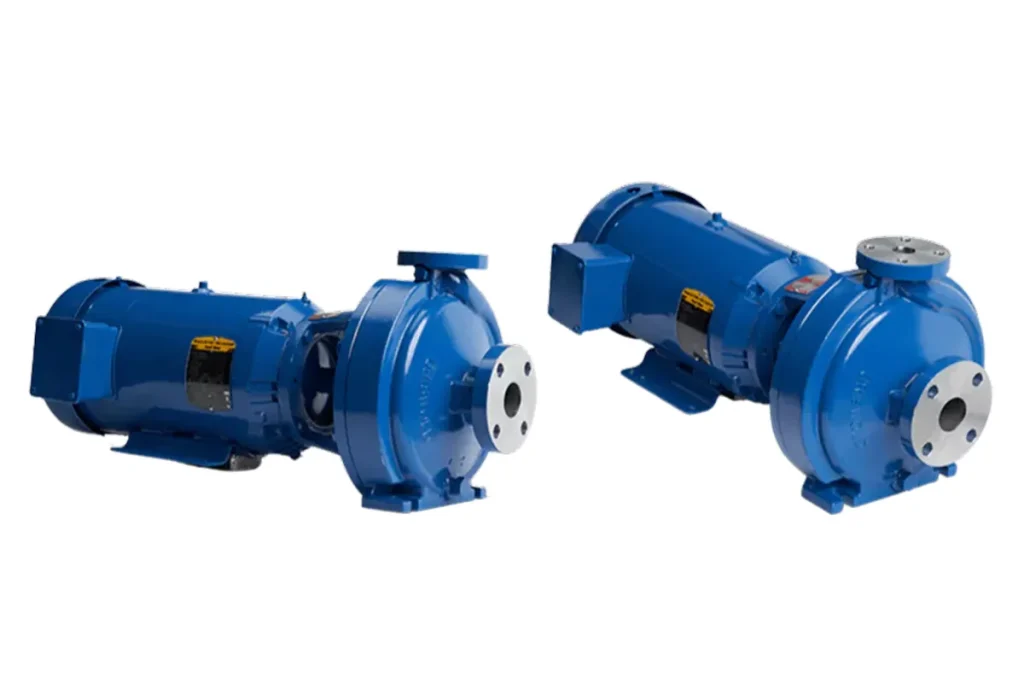
Griswold's 811CC Series
The 811CC (Close-Coupled) Series Centrifugal Pumps match the features, flexibility, and performance of standard 811 ANSI pumps while incorporating a compact, space-saving design that offers significant benefits. These pumps utilise an ANSI-dimensional liquid end that easily adapts to existing ANSI installations.
This means that the pump can “drop” right in line with the use of existing piping, providing an easy and economical replacement for most ANSI installations.
Features & Benefits
- Compact and economical
- Back pull-out design
- Highly customisable
- Fully open impeller
- Keyed- and bolted-impeller design prevents loosening in high temperatures
- Rugged construction to withstand corrosive and erosive fluids
Available Options
- Multiple seal options available
- Baseplate
- Accessories and spare parts
Key Specifications
- Max Flow: 72.7 m³/h
- Max Head: 22.9 m
- Max Temperature Up to 121.1C
- Available Materials: Ductile
- Iron, 316 Stainless Steel, CD4MCuN
- Available Sizes: 12
Applications
- Chemical Process
- Oil & Gas
- Energy
- General Industrial
- Mining
- Water
Principle of Operation
Centrifugal pumps are used to induce flow or raise a liquid from a low level to a high level. These pumps work on a very simple mechanism. A centrifugal pump converts rotational energy, often from a motor, into energy in a moving fluid.
The two main parts that are responsible for the conversion of energy are the impeller and the casing. The impeller is the rotating part of the pump, and the casing is the airtight passage that surrounds the impeller. In a centrifugal pump, fluid enters the casing, falls on the impeller blades at the eye of the impeller, and is whirled tangentially and radially outward until it leaves the impeller into the diffuser part of the casing. While passing through the impeller, the fluid is gaining both velocity and pressure.
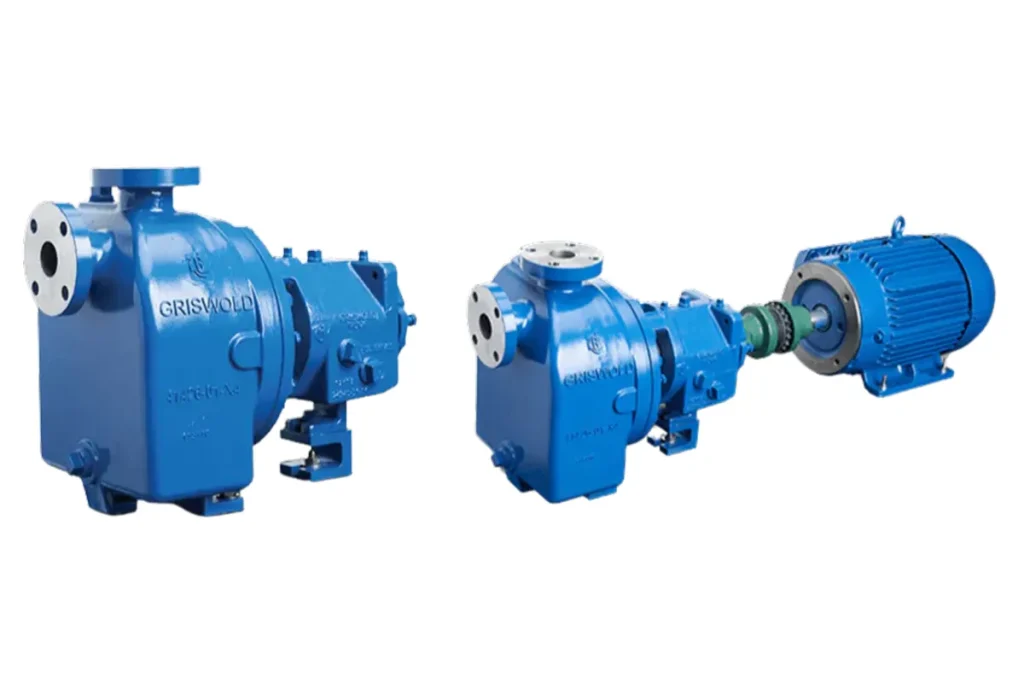
Griswold's 811SP Series
The 811SP Series are self-priming centrifugal pumps available in various sizes, capacities, and materials to fit virtually any process fluid application. With double the wear area of enclosed models, the 811SP Series impeller offers superior handling of solids, corrosives, and abrasives. Back pump-out vanes reduce hydraulic loads and seal chamber pressure.
They come with a wide range of sealing options coupled with seal chambers and stuffing boxes selected for service conditions to improve lubrication and heat dissipation of seal faces, maximising pump uptime.
Features & Benefits
- Component interchangeability with Griswold 811 ANSI Series
- Designed to meet the requirement of ASME B73.1
- Extra-large capacity, epoxy-coated oil
- Quick priming time and easy drainage
- Dynamically balanced fully open impellers with rear-adjustment capability
- INPRO® oil seals keep outside contaminants from lubrication media
Available Options
- Multiple seal options available
- Size and configuration options
- Epoxy coating
- Heavy-duty power frames
- Baseplate/mounting
- Accessories and spare parts
Key Specifications
- Max Flow: 295 m3 /hr
- Max Head: 115 m
- Max Temperature: 260°C
- Effective Static Lift: 7.5 m
Applicaitons
- Industrial Sump
- Mine Dewatering
- Chemical Transfer
- Bilge Water Removal
- Coal Pile Drainage
- Tank Car Unloading
- Petroleum Transfer
Principle of Operation
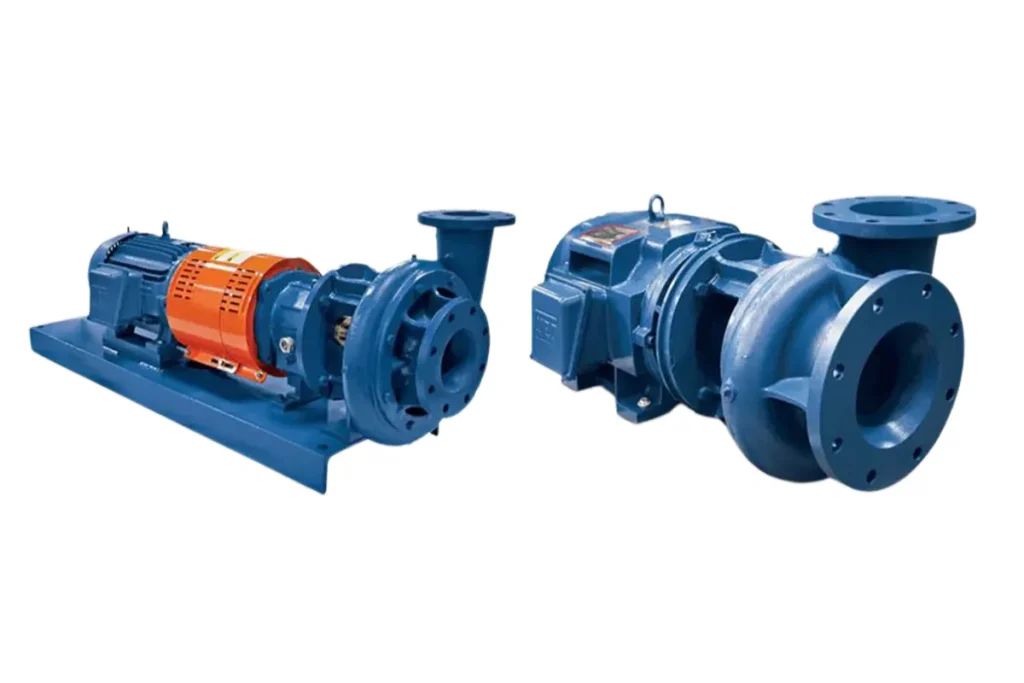
Griswold's 850 Series
with versatility in mind. Thanks to their efficient performance, extensive features, long life, and easy maintenance, these pumps are ideal for use in a wide variety of water applications.
Griswold 850 Series pumps have been specially engineered and precision-built to meet NSF/ANSI Standard 50 (NSF 50), which establishes the requirements for the equipment used in the water circulation systems of swimming pools, spas, and hot tubs.
Features & Benefits
- Heavy-duty, robust design
- Flanged connections per ASME B16.1
- Single-piece enclosed impellers
- Back pull-out design for ease of maintenance
- Renewable lead-free bronze-wearing rings.
- INPRO® labyrinth oil seals, sight glass, oversized shaft and bearings
Available Options
- Multiple seal options are available
- Size and configuration options
- Epoxy coating
- Baseplate/mounting
- Accessories and spare parts
Key Specifications
- Max Flow: 874 m³/hr
- Max Head: 131 m
- Max Temperature: 49°C
- Available Materials: Iron with Aluminum Bronze
- Available Sizes: 30
Applications
- Wastewater Systems
- HVAC Systems
- Boilers
- Cooling Towers
- Water Treatment
- Collection & Disposal
- Fountains
- Water Parks
- Zoos
- Commercial Swimming
- Pools
- Marine
- Commercial &
- Agricultural
- Irrigation
Principle of Operation
Centrifugal pumps are used to induce flow or raise a liquid from a low level to a high level. These pumps work on a very simple mechanism. A centrifugal pump converts rotational energy, often from a motor, into energy in a moving fluid.
The two main parts that are responsible for the conversion of energy are the impeller and the casing. The impeller is the rotating part of the pump, and the casing is the airtight passage that surrounds the impeller. In a centrifugal pump, fluid enters the casing, falls on the impeller blades at the eye of the impeller, and is whirled tangentially and radially outward until it leaves the impeller into the diffuser part of the casing. While passing through the impeller, the fluid is gaining both velocity and pressure.
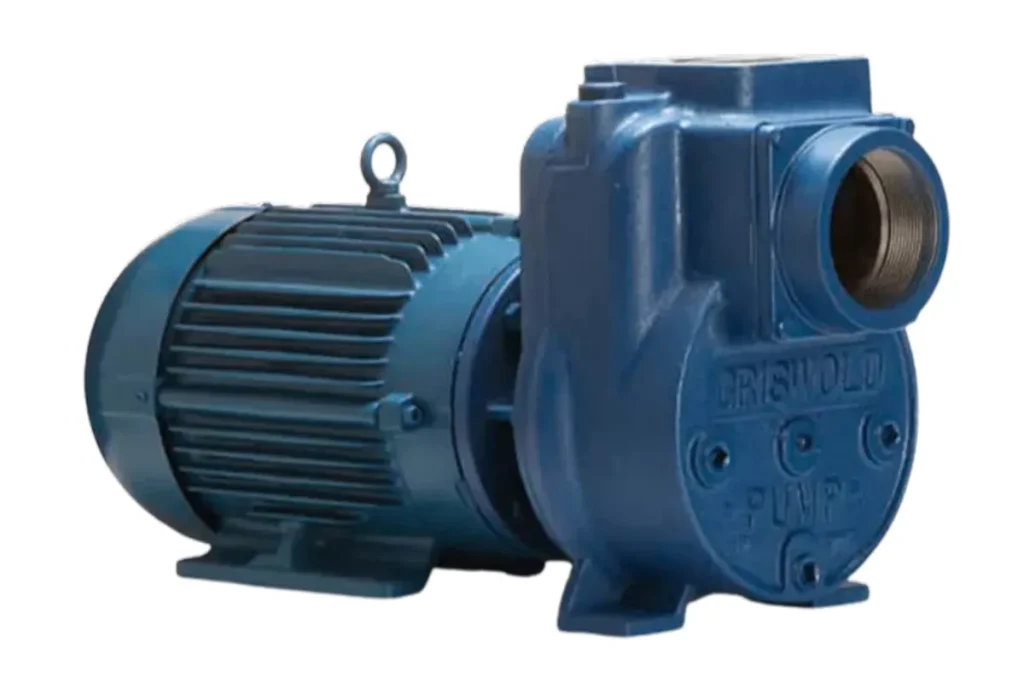
Griswold's H Series
Griswold’s H Series consists of high-pressure pumps that are ideally suited where clean water needs to be delivered at high pressures. Unlike the standard end suction centrifugal pump, the Griswold H series maintains its prime even after check valves fail.
The suction line is located at the higher part of the pump housing, keeping the impeller and mechanical seal covered with water at all times.
Features & Benefits
- Cast iron ASTM A48 class 30 case with built-in drain and priming plugs
- Bolt-on suction flange in variety of sizes to suit flow requirements
- Self-priming with the suction line on top of the pump
- Built-in check valves to prevent siphoning and the need for repriming
- Enclosed bronze impeller with a single piece design
Impeller is balanced and trimmed according to specific operating range - Seals available in Carbon Ni-Resist FKM, Carbon Silicon Carbide FKM, Silicon Carbide FKM, and Silicon Carbide Tungsten FKM
- Dual discharge connections
Available Options
- Multiple seal options are available
- Size and configuration options
- Baseplate/mounting
- Accessories and spare parts
Key Specifications
- Max Flow: 73.8 m³/hr
- Max Head: 79 m
- Max Temperature: 37.8°C
- Max Pressure: 7.6 bar
- Available Materials: Iron
Applications
- Draining Barges
- Tank Cars
- Underground Storage Tanks
- Sprinkler Systems
- Swimming Pools
- Marine
- Irrigation
- Water Sumps
Principle of Operation
Centrifugal pumps are used to induce flow or raise a liquid from a low level to a high level. These pumps work on a very simple mechanism. A centrifugal pump converts rotational energy, often from a motor, into energy in a moving fluid.
The two main parts that are responsible for the conversion of energy are the impeller and the casing. The impeller is the rotating part of the pump, and the casing is the airtight passage that surrounds the impeller. In a centrifugal pump, fluid enters the casing, falls on the impeller blades at the eye of the impeller, and is whirled tangentially and radially outward until it leaves the impeller into the diffuser part of the casing. While passing through the impeller, the fluid is gaining both velocity and pressure.